Robinhood CEO makes a bold prediction: AI will give rise to single-person unicorn companies.
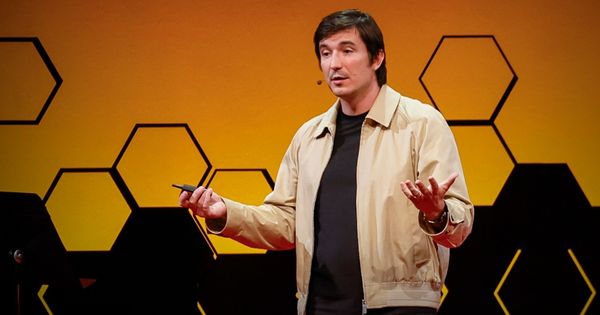
Robinhood CEO Vlad Tenev recently presented an optimistic view on the impact of artificial intelligence (AI) on employment. In a TED talk, he stated that AI is driving a "work singularity," accelerating the creation of new jobs and industries rather than merely leading to job losses. He believes that AI will restructure future work patterns, empowering individuals with capabilities previously held only by large companies, claiming, "AI will spawn solo unicorn companies."
Core Argument: AI Will Foster Solo Unicorn Companies, Empowering Individuals and Lowering Barriers to Entrepreneurship
Tenev noted, "We are on a rapidly accelerating curve of job creation, which I refer to as the ‘work singularity,’ representing not only new jobs but an entirely new family of jobs in every imaginable field—a ‘Cambrian explosion.’" He likened this to the internet, which gave people global reach, while AI provides them with a world-class team.
As AI tools take on tasks across engineering, marketing, research, operations, and customer support, he believes people can operate with far less institutional support, thereby lowering the barriers to starting businesses and new types of jobs. He predicted, "There will be a surge of new entrepreneurial activity, leading to micro-enterprises, individual agencies, and solo unicorns—by the way, I don’t think we’re far from this."
Research Support: AI-Using Companies Grow Faster and New Positions Continue to Emerge
Research supports some of Tenev's points. A study from MIT Sloan School of Management in October 2025 indicated that companies adopting AI tend to grow faster and create more jobs. Meanwhile, a World Economic Forum analysis from January 2025 estimated that as AI applications expand, nearly 170 million new roles will be created.
Tenev described this work singularity as part of a long historical pattern, from hunting and agriculture to blacksmithing and factory labor, where entire job categories have disappeared due to productivity gains brought on by automation. He stated, "Job disruption is a fundamental characteristic of human evolution."
The Current Transformation's Uniqueness: The Unprecedented Speed of AI Disruption
He pointed out that what makes the current transformation feel different is the unprecedented speed at which AI is disrupting the job market. AI systems can now exceed narrowly defined tasks and operate across multiple domains—something early technologies like personal computers and smartphones could not do.
However, this acceleration has heightened unease within the workforce, as traditional career paths become harder to predict. According to a Pew Research Center survey from February 2025, over half of U.S. workers expressed concerns about AI's impact on the workplace, with about one-third believing that AI will reduce rather than increase their long-term job opportunities.
Historical Insights: Predictions of Technological Disruption Often Miss the Mark as Human Society Continues to Adapt
Nevertheless, Tenev warned against assuming that disruption equates to a long-term shortage of jobs. He cited past technological panics that failed to materialize, such as the 1990s warnings about programming jobs being outsourced, and fears of chess's decline after IBM's Deep Blue defeated Garry Kasparov in 1997. He remarked, "Thus, even in seemingly obvious situations, our predictions about the future can sometimes be completely off the mark."
Despite the uncertainties surrounding AI's impact on employment, Tenev stated that human society has always adapted to technological changes. He concluded, "Even in the darkest and most uncertain times, humanity excels at creating meaning and purpose for itself. I am very confident that young people in their 20s in the future, perhaps collaborating with AI, will continue to build new things that both excite and scare us."