Musk comments on Nvidia's self-driving software: It will not pose a substantial competition to Tesla in the next 6 years
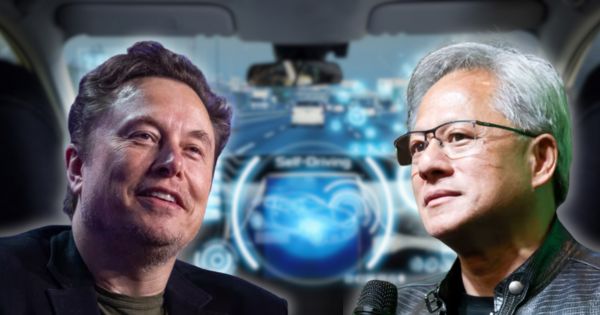
Tesla CEO Elon Musk recently stated that Nvidia's self-driving software will not pose any significant competitive pressure on Tesla in the next five to six years. This comment came in response to Nvidia's demonstration of its open-source AI model family, named Alpamayo, designed for handling complex urban driving, based on camera video inputs, at the 2026 International Consumer Electronics Show.
Nvidia's Self-Driving Software Technology Gap: Years Needed from "Partially Usable" to "Safer than Humans"
Musk wrote on social media platform X, "It will take years for self-driving cars to go from ‘barely usable’ to being much safer than humans." He added that traditional automakers also face additional delays, as it takes time to design and integrate cameras with AI computers into production vehicles.
While Musk holds this view, Nvidia CEO Jensen Huang praised Tesla’s self-driving technology as the "most advanced autonomous driving stack in the world." He told Bloomberg, "I believe Musk's approach is the most advanced in autonomous driving and robotics today. It's a very difficult technology stack to criticize; I simply encourage them to continue doing what they're doing."
Industry Reality: Slow Deployment of Self-Driving Technology and Regulatory Scrutiny from Safety Incidents
However, the progress of autonomous driving technology has not diminished the challenges faced by this emerging industry. Waymo operates fully driverless robot taxis in several U.S. cities, but it voluntarily initiated a software recall last December due to vehicles failing to stop for school buses. In the same month, the company suspended its San Francisco services after a power outage caused vehicles to stall at intersections, disrupting traffic.
During the power outage, Musk noted on X that Tesla's limited robot taxi service, equipped with safety monitors, was not affected.
Tesla's Advantage: Existing Fleet and Pure Vision System
Tesla's advantage lies in its existing fleet and pure vision system. Its vehicles come standard with a unified camera and onboard AI hardware. Under the "Tesla Vision" initiative, the company primarily relies on cameras rather than LiDAR, and has removed radar and ultrasonic sensors from vehicles in many markets.
Musk first proposed the concept of self-driving cars in 2013, with the first version of Autopilot launched two years later. However, Tesla's self-driving ambitions have come under scrutiny, with critics questioning the safety and reliability of its Autopilot and "Full Self-Driving" features, especially following a series of high-profile accidents (some of which resulted in fatalities and triggered federal investigations) that heightened these concerns.
Future Outlook: Technological Competition and Safety Compliance
The open dialogue between Nvidia and Tesla in the self-driving domain highlights industry divergences in technological approaches, deployment timelines, and safety standards. Nvidia, leveraging its powerful AI chips and open-source software ecosystem, is actively courting traditional automotive customers, while Tesla relies on its vast real-world driving data and highly integrated hardware architecture to maintain its lead. The outcome of this competition will depend not only on the speed of technological breakthroughs but also on the safety, reliability of large-scale deployments, and the acceptance of regulatory bodies and the public.